
The fastest growth move isn’t scaling ads. It’s fixing what’s broken. Here are 5 common revenue leaks and the plugs you can use to lock them down this week.
If your revenue looks fine but your bank balance says otherwise, you’re not unlucky.
You’re leaking.
Most Amazon sellers don’t lose money in obvious ways. There’s no single crash, no clear failure, no alert that says “you just lost 18% of profit this month.” Margin disappears quietly. Click by click. Fee by fee. Missed fix by missed fix.
That’s why profitable sellers still can’t get ahead.
And why the fastest way to grow is not launching something new.
It’s stopping what’s already draining you.
Here are the five silent revenue leaks we see costing sellers 10–30% every month, and exactly how high-performing brands shut them down.
Leak #1: Listings That Bleed Before Ads Can Work
If your listing doesn’t convert, ads won’t help.
They just amplify the problem.
Most sellers check listings reactively. A dip in sales. A spike in spend. Then a scramble. Top sellers audit listings before performance drops.
What we see constantly:
- Suppressed listings that went unnoticed for weeks
- Titles that drifted past limits after edits or auto-updates
- Primary keywords buried past the first 80 characters
- Bullets that describe features but don’t sell outcomes
- Images that look fine but never answer objections
What winning sellers do instead:
- Check suppression at least weekly, not monthly
- Lock the primary keyword into the first 80 characters of the title
- Rewrite bullets in a strict sequence: benefit first, feature second, proof last
- Utilize all image slots and optimize A+ before increasing bids
- Measure listing success by conversion rate, not gut feel
Target benchmark:
Hero SKUs should hold 15% or higher CVR before aggressive ad scaling.
This is where most sellers find revenue leaks. They buy traffic before fixing conversion. We rebuild listings first so ads amplify profit, not problems.
Leak #2: Ad Spend That Never Pays You Back
Ad waste is sneaky because it feels productive.
Spend is flowing. Clicks are coming in. Dashboards look active. Meanwhile, margin silently tanks.
The fastest way to spot waste isn’t by looking at averages. It’s by enforcing rules.
What top sellers do every single week:
- Pause search terms after 30–50 clicks with zero sales
- Add negatives weekly, not “when there’s time”
- Separate campaigns by intent: defensive, generic, competitor
- Cap bids to TACoS targets, not average CPC
- Harvest winners and reallocate budget deliberately
The fix? Clean ads first. That means removing wasted spend, isolating converting intent, and capping bids to profit before scaling.
We routinely recover double-digit efficiency gains without increasing spend. Not by magic. By discipline.
Leak #3: Catalog Decay That Silently Kills Rank
Listings don’t stay healthy on their own.
Indexing slips. Attributes drop. Variation themes break. Parent ASINs auto-split. None of these trigger alarms. It just slowly erodes performance.
This is catalog decay, and it is one of the most expensive leaks on Amazon.
What strong operators do monthly:
- Recheck keyword indexing on the top 20% of SKUs
- Audit variation relationships for silent splits
- Refresh backend terms and image order
- Rebuild broken parents immediately, not “later”
Catalog decay is invisible until revenue falls. By then, recovery is harder and more expensive.
We catch these issues early because we actively monitor catalog health. Most sellers only notice once rank is gone.

Leak #4: Money Amazon Already Owes You
This one hurts the most because it’s pure profit.
Lost inventory. Damaged units. Miscounts. Inbound discrepancies. Reimbursements that never land.
Most sellers recover a fraction of what Amazon owes them. Not because the money isn’t there. Because the process is tedious, inconsistent, and easy to lose track of.
What disciplined sellers do:
- Audit FBA inventory movement weekly
- Reconcile reimbursements against actual payouts
- Track claim aging and re-file aggressively
- Keep documentation ready before Amazon asks
This isn’t a theoretical upside.
One brand we audited recovered $229,000 that had already been written off as “part of doing business.”
No ads. No promos. No risk. Just accountability.
👉 Read the full case study here.
Leak #5: No Weekly KPI Rhythm
Chaos doesn’t show up as a clear problem.
It shows up as noise.
When sellers lack a weekly operating rhythm, small issues pile up. No one owns them. No one fixes them. Margin erosion accelerates.
High-performing sellers track a short list relentlessly, every week:
- Sessions
- Conversion rate
- TACoS
- Buy Box percentage
- Out-of-stock rate
- Suppressed SKUs
Every issue gets an owner and an ETA.
No owner means no fix. No fix means more leakage.
This is where most agencies fall apart. They report. They don’t enforce. We build systems that make issues visible and unavoidable.
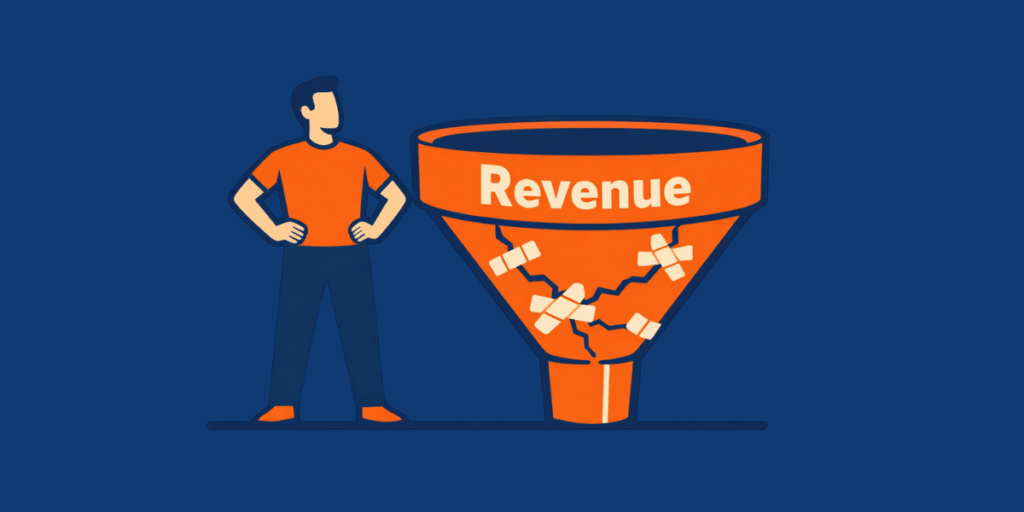
From Plugging Revenue Leaks to Owning the System
This is how brands move from surviving Amazon to controlling it.
Not by chasing the next tactic.
Not by stacking tools.
Not by reacting faster.
Real control comes from fixing what is already leaking, then building forward with intention.
At Awesome Dynamic, our work starts where most agencies rush past. We slow down to understand the full picture before prescribing a single move. We define success in numbers that actually matter to your business. Then we execute with discipline, so progress is steady, visible, and repeatable.
That approach runs on three pillars:
Deep Understanding
We pressure-test the business before touching the tactics. Margins, catalog structure, ad efficiency, inventory flow, and operational drag all get examined together so fixes solve root problems, not symptoms.
Outcome-Driven Strategy
Every recommendation ties back to a 90-day outcome. Revenue. Margin. Rank stability. Enterprise value. Strategy becomes math, not guesswork, and priorities stop competing for attention.
Disciplined Execution
Weekly rhythm. Clear ownership. No loose ends. We surface issues early, fix them fast, and keep momentum moving forward instead of resetting every quarter.
When those three pillars are in place? Growth stops feeling fragile. Ads work harder. Inventory decisions calm down. Profit becomes predictable. Scaling is inevitable.
If revenue feels heavy and progress feels harder than it should, the problem is not demand.
It is leakage.
And the first step is not another tactic.
It is pressure-testing what is already there.